Updated September 3, 2026By the Banff.tips editorial teamWritten for real visits. Double-check anything time-sensitive before you go.
Check before going
Trail status, ice, closures, parking pressure, and seasonal transit are volatile. Confirm Parks Canada trail conditions and current service before leaving.
Bottom line
The practical answer
Johnston Canyon is worth doing, but it is not worth letting parking decide your whole morning.
01
Read this first
Best answer
Go early, use a current transit or tour option if it fits, or choose a different walk before you waste the day circling.
The lower canyon is the easy win. Continue farther only if trail conditions, footwear, daylight, and group energy all make sense.
Parks Canada recommends hiking poles and ice cleats when trails are snowy or icy. Check the current surface before leaving and use gear that fits the conditions.
Details can change quickly — check before going.
Park admission/pass status: Parks Canada lists free admission through September 7, 2026 and regular admission from September 8. Check the rule for your exact Johnston Canyon date.
Location parking fees: Until October 6, 2026, personal vehicles cannot use the Bow Valley Parkway from its east Trans-Canada Highway junction to Johnston Canyon. Johnston Canyon remains reachable by vehicle via Castle Junction. Parking availability also changes by season and demand; this guide does not promise a space.
Transit/shuttle reservations: Route 9 is direct, non-reservable seasonal service from Banff on the current Roam page. Service windows can change, so check the live schedule before relying on it.
Early drive: simplest when parking works, frustrating when it does not. Have a backup walk chosen before you leave Banff.
Until October 6, 2026, personal vehicles cannot use the Bow Valley Parkway from its east Trans-Canada Highway junction to Johnston Canyon. If driving, reach Johnston Canyon via Castle Junction and check the current Parks Canada notice before leaving.
Transit or tour: Roam currently describes Route 9 as direct, non-reservable summer service from Banff. Confirm the current schedule before relying on it.
Winter guided option: often the least stressful choice if you want the icewalk experience without guessing on gear and conditions.
Skip-and-pivot: completely valid if the day is late, crowded, icy, smoky, or wet.
03
Plan detail
Lower canyon or upper falls
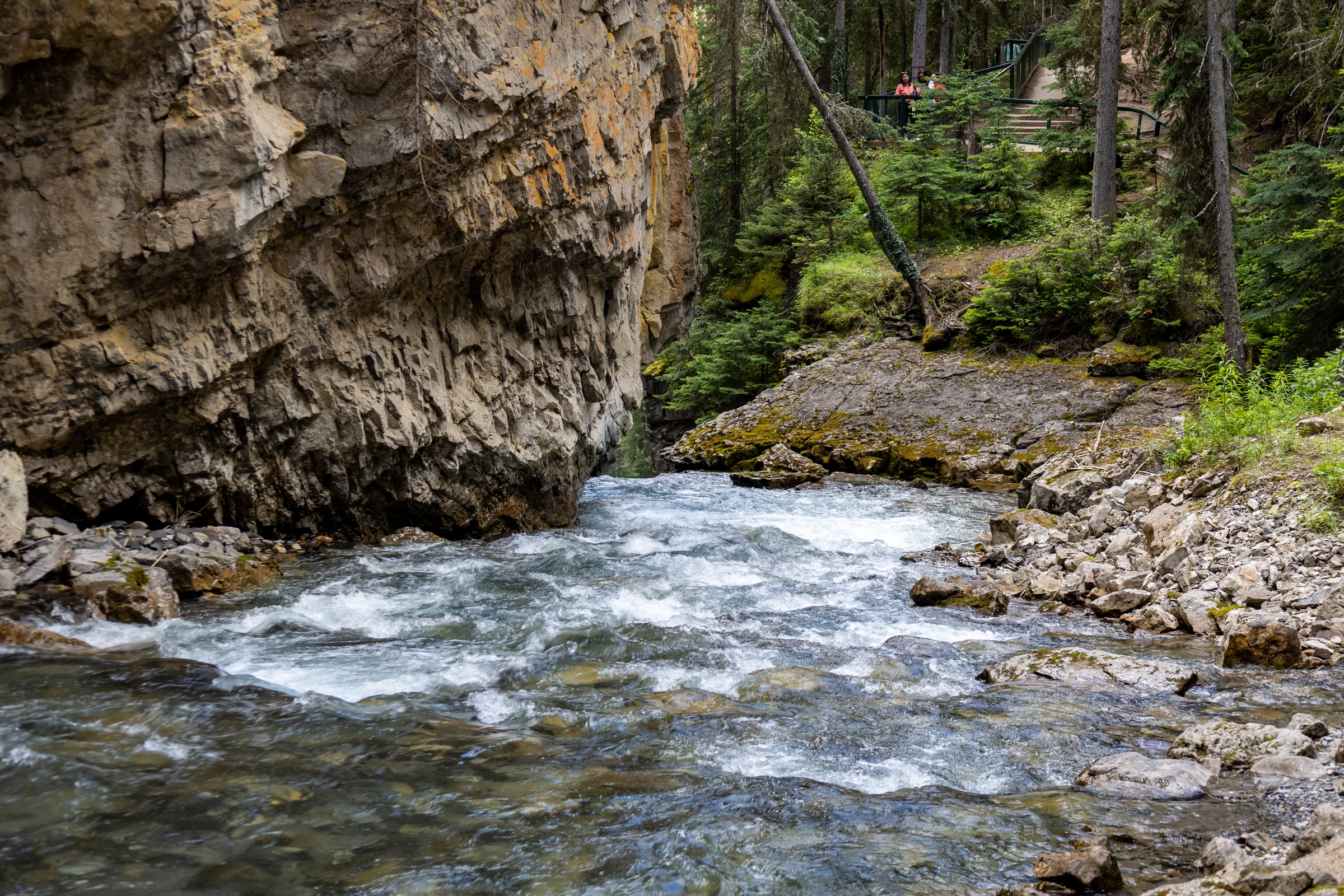
Lower canyon is the better default for first-timers, families, uncertain weather, or anyone who mainly wants the catwalk experience.
Parks Canada lists Lower Falls at 1.1 km one way and about 1 hour return; Upper Falls is 2.4 km one way and about 2 hours return.
Upper falls is the add-on, not the starting promise. Continue only if the trail surface, daylight, footwear, and group energy still look good.
In winter, do not let the photos make the decision. Ice, crowding, and traction matter more than whether the frozen falls look dramatic online.
If the canyon is the first stop of a bigger day, decide the turnaround point before you start walking.
Lower canyon is a complete visit. Upper falls is the bonus round.
04
Plan detail
What to check before leaving
Parks Canada trail conditions and closures.
Current Roam Route 9 or operator service if you are not driving.
Weather, traction, and daylight.
A fallback route close to town if the canyon access plan falls apart.
05
Plan detail
Good fallback walks
Bow River and Bow Falls if you are staying in Banff town.
Vermilion Lakes for a low-effort scenic walk with easier exit options.
Cave and Basin boardwalks when weather or traction is not cooperating.
Lake Minnewanka shoreline if road, weather, and wildlife notes are clean.
Questions we get asked
Frequently asked
Is Johnston Canyon still worth visiting when parking is busy?
Yes, but it is not worth letting parking consume the morning. Go early, use a current transit or tour option if it fits, or choose a fallback walk before the day turns into circling.
Should I stop at Lower Canyon or continue to Upper Falls?
Lower canyon is the better default for first-timers, families, uncertain weather, and anyone mainly wanting the catwalk experience. Continue only if trail surface, daylight, footwear, and group energy still look good.
Do I need traction for Johnston Canyon in winter?
Parks Canada recommends hiking poles and ice cleats when trails are snowy or icy. Check current conditions before leaving and use equipment that fits the surface.