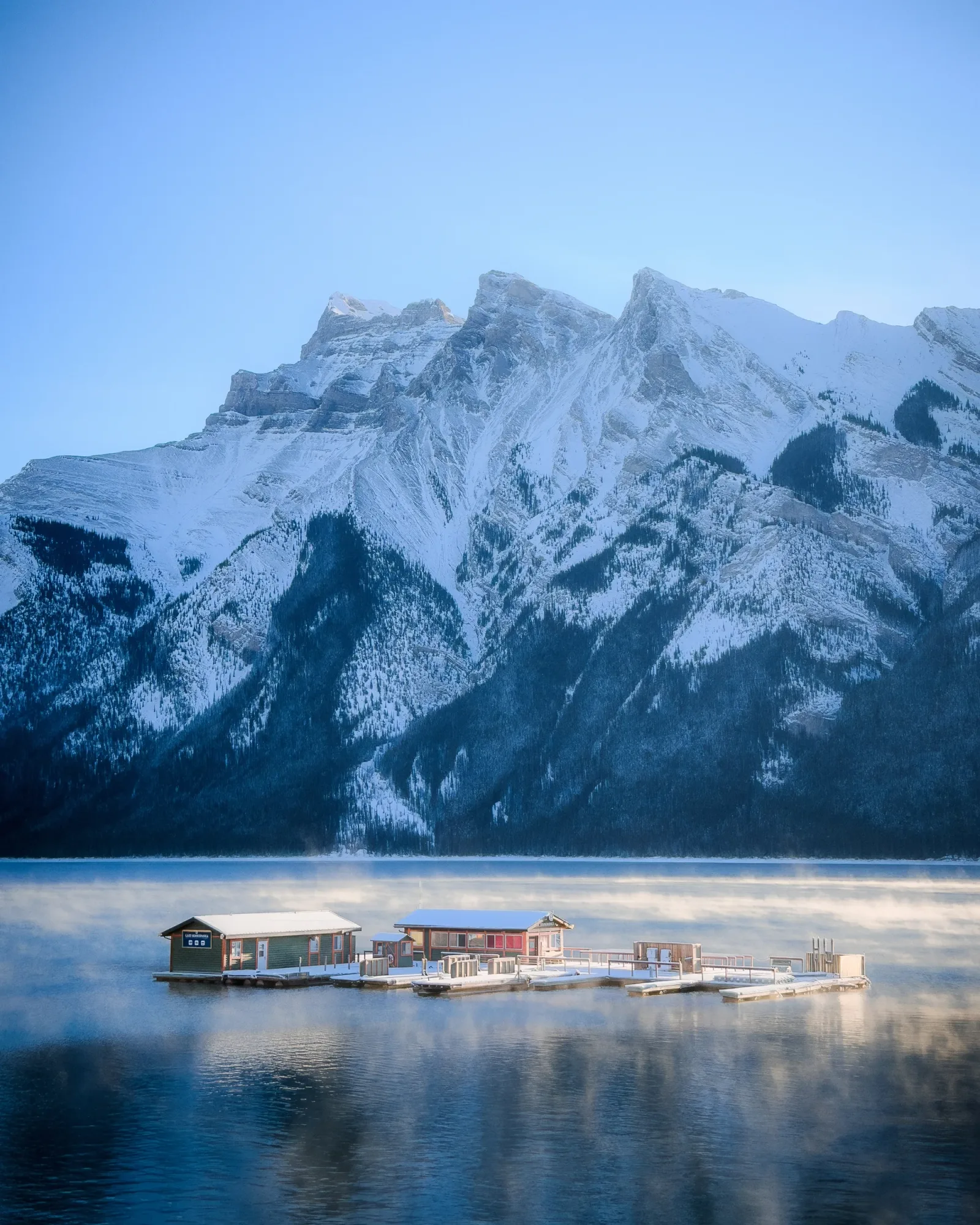
Shoulder-season days reward a flexible plan.Photo: Cody Gray
Updated May 25, 2026By the Banff.tips editorial teamWritten for real visits. Double-check anything time-sensitive before you go.
Check before going
Weather, avalanche hazard, road conditions, closures, and trail status can change hourly. Confirm live conditions before leaving.
Bottom line
The practical answer
Winter and shoulder season are not bad times to visit Banff. They just punish summer assumptions.
01
Read this first
Best answer
Plan around daylight, traction, road conditions, and what is actually open.
Use signed winter routes, current trail conditions, 511 Alberta, and Avalanche Canada before making bigger outdoor decisions.
If you are not trained for avalanche terrain, keep winter plans on maintained, signed, frontcountry routes.
Details can change quickly — check before going.
Park admission/pass status: Parks Canada lists free admission through September 7, 2026 and regular admission from September 8. Recheck the admission rule for the exact winter or shoulder-season date.
Location parking fees: Some trailhead or attraction parking may be unplowed, paid, full, or temporarily restricted. Confirm current access before driving.
Transit/shuttle reservations: Seasonal transit and shuttles may reduce or stop outside peak windows. Check route pages before relying on them.
Trails can be icy, muddy, snow-covered, or closed even when town streets look fine.
Some lake, alpine, and shuttle access windows change or disappear.
Road conditions can swing quickly with snow, freeze-thaw, wind, or poor visibility.
Daylight is shorter, which makes late starts and long drives riskier.
03
Plan detail
The gear threshold
If a walk might be icy, bring traction. If you do not have traction, choose a maintained town route instead.
If a plan touches avalanche terrain and you are not trained for it, choose a resort, guided operator, or frontcountry route.
If you are driving outside town in winter, check the road before you leave and be honest about tires and driver comfort.
If the day already feels complicated on paper, simplify it. Cold makes bad logistics feel worse.
Winter does not need a bigger plan. It needs a more honest one.
04
Plan detail
Safer plan shapes
Town plus hot springs or museum when visibility is poor.
Signed winter walk with traction when conditions are simple.
Ski-resort day when you want snow without inventing your own terrain plan.
Short scenic drive only after checking 511 Alberta and forecast conditions.
05
Plan detail
What to check before leaving
511 Alberta for highways and incidents.
Parks Canada trail and closure pages for trail status, wildlife closures, and seasonal restrictions.
Avalanche Canada before any plan that approaches avalanche terrain.
Current daylight, forecast, footwear, layers, and whether your group is still having fun.
Questions we get asked
Frequently asked
What changes in Banff outside summer?
Daylight gets shorter, trails can turn icy, muddy, or snow-covered, and some lake, alpine, shuttle, or road access windows change. The plan still works when you check current conditions and keep the day honest.
Do I need traction for winter or shoulder-season walks?
If a walk might be icy, bring traction. If you do not have it, choose a maintained town route, a warm indoor anchor, or a simpler frontcountry plan instead.
When should I simplify a winter Banff plan?
Simplify when road conditions, daylight, footwear, visibility, or group energy make the original plan feel complicated. A short signed route plus a warm reset often beats forcing a summer-paced day.